
WINZ Recoverable Assistance is a non-taxable, interest-free loan provided by Work and Income New Zealand (MSD) to help individuals and families cover essential, immediate costs they cannot afford. Unlike a benefit payment, this assistance must be paid back over time through regular deductions from your income or benefit payments.
Financial emergencies can strike anyone, regardless of whether they are currently receiving a main benefit or working full-time. In New Zealand, the safety net provided by the Ministry of Social Development (MSD)—commonly referred to as Work and Income or WINZ—includes specific mechanisms to assist during these crises. Understanding the distinction between a grant (which you do not pay back) and recoverable assistance (which acts as an interest-free loan) is vital for managing your long-term financial health.
What is WINZ Recoverable Assistance?
Recoverable Assistance is essentially an interest-free loan from the New Zealand government. It is designed to help people meet essential, immediate needs that they cannot pay for from their own resources. It is crucial to understand that “recoverable” means exactly that: the money must be returned to MSD.
This form of support is distinct from a main benefit (like Jobseeker Support or Supported Living Payment). It is strictly for one-off costs. If approved, Work and Income will usually pay the provider of the goods or service directly, rather than depositing cash into your bank account, ensuring the funds are used for the intended purpose.

Recoverable Assistance Eligibility Criteria
Eligibility for WINZ recoverable assistance is not automatic. Case managers assess applications based on strict criteria to ensure the applicant has no other means of paying for the essential cost. To qualify, you generally must meet the following requirements:
- Residency: You must be a New Zealand citizen or permanent resident and normally live in New Zealand.
- Income and Asset Limits: You do not necessarily need to be on a benefit to qualify. Low-income earners may also apply. However, there are income and cash asset limits. If you have savings that could cover the cost, your application will likely be declined.
- Essential Need: The cost must be for an essential need. This definition is specific; it typically covers items required for health, safety, or maintaining employment.
- Inability to Pay: You must prove you cannot pay the cost yourself or access credit from other sources (like a bank overdraft) at a reasonable rate.
Advance Payments of Benefits vs. Recoverable Assistance
There is often confusion between an “Advance Payment of Benefit” and “Recoverable Assistance.” While both result in a debt to Work and Income, they are technically different categories of support.
Advance Payment of Benefit
If you are already receiving a main benefit (such as Sole Parent Support or Jobseeker Support), you can apply for an Advance Payment. This is a lump sum payment of up to six weeks’ worth of your benefit. This is the most common form of borrowing for beneficiaries.
- Limit: Usually capped at six weeks of your net benefit rate.
- Repayment: Deducted immediately from your subsequent benefit payments.
Recoverable Assistance Payment (RAP)
This category is broader and can apply to non-beneficiaries or beneficiaries who have exhausted their Advance Payment options but still face an immediate essential need. RAP is often used for costs that exceed the limit of an Advance Payment or for specific categories like rental bond assistance.

Food Grants and Hardship Support
One of the most common reasons New Zealanders approach Work and Income is for food assistance. It is critical to distinguish between recoverable loans and non-recoverable grants.
Are Food Grants Recoverable?
Generally, Special Needs Grants for food are not recoverable. This means you do not have to pay them back. However, there are limits. If you require food assistance frequently (more than two or three times in a 12-month period), you may be required to undergo a budgeting activity or work with a budget adviser. In rare cases where the system is deemed to be abused, or if you have exceeded the maximum entitlement for non-recoverable grants, further assistance might be issued as a recoverable loan.
Other Hardship Support
Beyond food, there are other grants available that may not need to be repaid, depending on your circumstances:
- Medical Costs: Urgent medical or dental treatment may be covered by a Special Needs Grant.
- School Costs: Uniforms and stationery can sometimes be covered, though this often falls under recoverable assistance depending on the time of year and income levels.
- Power and Gas: If you are facing disconnection, WINZ can assist. This is almost always a recoverable cost (a loan) because it is a payment of a debt you have incurred.
What Costs Are Covered by Recoverable Assistance?
Recoverable assistance is strictly for essentials. You cannot use this funding for fines, non-essential travel, or luxury items. Common approved costs include:
1. Whiteware and Appliances
If your washing machine or fridge breaks down, WINZ can provide a loan to repair or replace it. They usually require you to get quotes from approved suppliers. They will generally approve the most cost-effective, reliable option, not top-of-the-line models.
2. Car Repairs
For many New Zealanders, a vehicle is essential for getting to work. If your car requires repairs to warrant a WOF (Warrant of Fitness) or to remain drivable, you may be eligible for a loan. You will need to provide a quote from a mechanic.

3. Rent and Bond
Moving houses is expensive. WINZ can provide recoverable assistance for:
- Rent Arrears: To prevent eviction (though this is assessed carefully).
- Bond: A loan to cover the bond required for a new tenancy. This is paid directly to Tenancy Services.
- Rent in Advance: Covering the initial rent payment required by landlords.
How to Apply via MyMSD
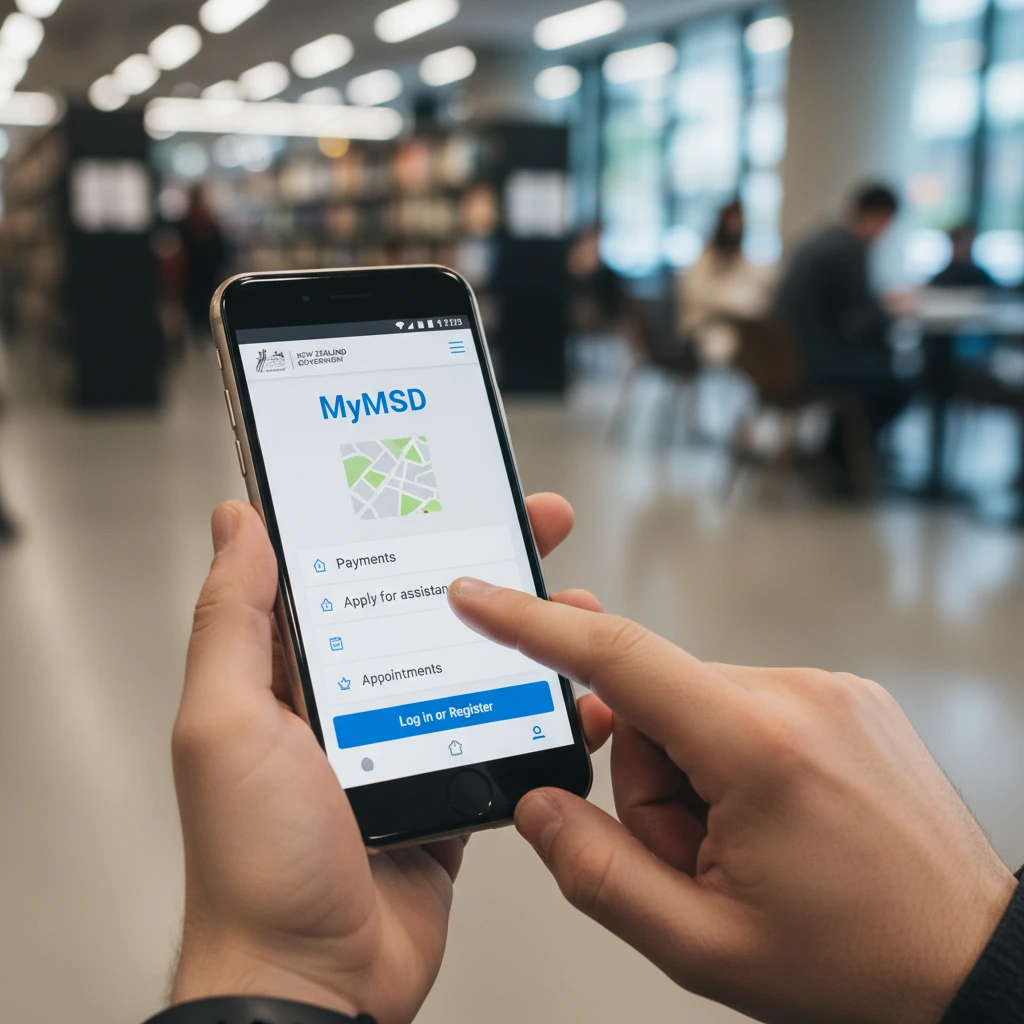
The Ministry of Social Development has moved many of its services online. The fastest way to apply for recoverable assistance or food grants is through the MyMSD platform.
Step-by-Step Application Process
- Log in to MyMSD: Use your client number and password to access the portal.
- Select ‘Apply for Assistance’: Navigate to the section for one-off costs or hardship.
- Choose the Cost Type: Select what you need help with (e.g., Food, Dental, Car Repairs).
- Upload Evidence: This is the most critical step. You must have digital copies (photos or PDFs) of:
- Quotes for the goods or services.
- Bank statements showing your current balances (if requested).
- Proof of identity (if not already verified).
- Submit and Wait: Once submitted, a case manager will review the application.
Note: If you cannot use MyMSD, you can call the contact centre on 0800 559 009. However, wait times can be significant. For immediate food needs, the call centre is often the requisite route if MyMSD indicates you need to speak to a person.
Repayment Obligations and Rates
Taking on recoverable assistance is a legal commitment to repay the Crown. It is vital to understand how this will impact your weekly budget.
How Repayments are Calculated
If you are on a benefit, WINZ will automatically deduct a set amount from your weekly or fortnightly payment. The rate of repayment is determined by the total amount of debt you owe and your ability to pay without causing further hardship.
If you are not on a benefit, you will be required to set up a direct debit or automatic payment to the Ministry of Social Development. You must maintain these payments until the debt is cleared.
Minimum Repayment Amounts
While repayment rates are negotiable based on hardship, there are generally minimum thresholds. If you have multiple debts (e.g., an Advance Payment plus a Recoverable Assistance loan for a car repair), these are consolidated. If the total deduction is too high and leaves you without enough money for food, you can contact WINZ to request a “debt review” to lower the weekly repayment amount, extending the term of the loan.
Frequently Asked Questions
Below are common questions regarding recoverable assistance and hardship support in New Zealand.
How much can I borrow from WINZ for recoverable assistance?
There is no single fixed limit for Recoverable Assistance Payments (RAP) as it depends on the specific essential need and your ability to repay. However, Advance Payments of benefits are typically capped at six weeks of your benefit entitlement. For specific items like dental or car repairs, approval is based on reasonable market costs (quotes).
Do I have to pay back WINZ food grants?
In most cases, no. Special Needs Grants for food are usually non-recoverable. However, if you have received multiple grants recently or exceed the maximum entitlement for the period, WINZ may issue further food support as a recoverable loan which must be paid back.
Can I get recoverable assistance if I work full-time?
Yes. You do not need to be a beneficiary to qualify. If you are on a low income and face an emergency cost you cannot pay, you may be eligible. You will be subject to an income and asset test to ensure you genuinely cannot afford the cost yourself.
How long does it take for WINZ to approve a loan?
If you apply via MyMSD with all correct documentation (quotes, bank statements), approval can happen within 24 to 48 hours. For urgent food grants, approval is often same-day. Complex requests or applications missing documents will take longer.
What is the difference between an Advance Payment and Recoverable Assistance?
An Advance Payment is a lump sum of your future benefit entitlement (only for beneficiaries). Recoverable Assistance is a separate loan available to both beneficiaries (who have used up their advance) and non-beneficiaries for specific essential costs.
Can WINZ help with car repairs?
Yes, WINZ can provide recoverable assistance for car repairs if the vehicle is essential for you to get to work, or for you or a family member to attend regular medical treatment. You will need to provide a quote from a mechanic and proof of why the car is essential.


