
Car finance rates in New Zealand typically range from 8.95% to 22.95% p.a. for 2024, varying significantly based on the lender, your credit score, and whether the vehicle is new or used. Securing the lowest rate requires comparing bank personal loans against dealership finance offers and optimizing your credit profile before applying.
Navigating the landscape of car finance rates NZ can be as complex as the vehicle market itself. With the Official Cash Rate (OCR) fluctuations and changing government regulations, understanding the cost of borrowing is critical for Kiwi motorists. Whether you are looking to purchase a brand-new EV or a reliable second-hand runner, the difference of a few percentage points can amount to thousands of dollars over the life of a loan.
This comprehensive guide breaks down the intricacies of the New Zealand lending market, comparing dealer finance against personal loans, demystifying balloon payments, and analyzing how vehicle age impacts your interest rate.
The Current State of Car Finance Rates in NZ
In the current New Zealand economic climate, borrowing costs have stabilized at a higher plateau compared to the historic lows seen a few years ago. Major banks and third-party lenders such as UDC, MTF, and finance companies have adjusted their rates in response to the Reserve Bank of New Zealand’s monetary policy.
Currently, a “competitive” rate for a borrower with excellent credit falls between 8.95% and 10.95%. However, for those with average credit scores or purchasing older vehicles, rates can easily climb between 12.95% and 19.95%. It is essential to look beyond the advertised “headline rate” and understand the comparison rate, which includes establishment fees and monthly administrative costs.

Dealer Finance vs. Personal Loans: Which is Better?
One of the first decisions a buyer must make is whether to arrange finance through the dealership or secure a personal loan from a bank or independent lender. Both options have distinct advantages and disadvantages depending on your financial situation.
Dealer Finance
Dealerships offer convenience. You choose the car, sign the paperwork, and drive away. Dealers often have relationships with multiple finance companies, allowing them to shop your profile around. Furthermore, manufacturers occasionally offer subsidized finance rates (e.g., 0% or 1.9% p.a.) to clear stock of specific new models.
Pros:
- Convenience: One-stop-shop experience.
- Subsidized Rates: Access to manufacturer specials on new cars.
- Negotiation Leverage: Dealers may lower the car price if you finance with them.
Cons:
- Higher Base Rates: On used cars, dealer rates are often higher to include their commission.
- Sales Pressure: High-pressure environment to upsell insurance and warranties.
- Balloon Payments: Often structured with large final payments to make weekly costs look lower.
Personal Loans
A personal loan involves borrowing a lump sum from a bank (like ANZ, Westpac, or BNZ) or a peer-to-peer lender (like Harmoney). This effectively makes you a “cash buyer” when you walk into the dealership.
Pros:
- Bargaining Power: negotiating as a cash buyer can secure a better purchase price.
- Transparency: Fees and rates are usually clearer without dealership markup.
- Flexibility: You are not tied to a specific vehicle when you apply for pre-approval.
Cons:
- Stricter Criteria: Banks may have tighter lending criteria than second-tier dealer finance.
- Time: The application process can take longer than on-the-spot dealer approval.

Interest Rates: New vs. Used Vehicles
The age of the vehicle you intend to purchase has a direct correlation with the car finance rates NZ lenders will offer. Generally, new cars attract lower interest rates, while used cars attract higher rates.
Why are New Car Rates Lower?
Lenders view new cars as lower-risk assets. They have a known value, come with warranties, and are less likely to suffer mechanical failure that could stop the borrower from getting to work (and earning the money to repay the loan). Additionally, manufacturers often subsidize the finance cost to move inventory.
The Reality of Used Car Rates
Used vehicles, particularly imports, carry higher risks regarding resale value and reliability. Consequently, lenders charge a “risk premium.” While a new car might be financed at 9%, a 10-year-old used import might be financed at 14% or higher. When calculating your budget, it is vital to adjust your expected interest rate based on the age of the vehicle.
Balloon Payments Explained
You may see advertisements for high-end vehicles with surprisingly low weekly repayment figures. This is often achieved through a structure known as a “Balloon Payment” or “Residual Value” loan.
What is a Balloon Payment?
A balloon payment is a large lump sum scheduled for the very end of the loan term. Instead of paying off the entire principal of the loan over 3 to 5 years, you only pay off a portion, leaving a substantial amount (the balloon) to be paid effectively on the last day.
For example, on a $50,000 loan, you might pay off $30,000 over 3 years. At the end of the term, you still owe $20,000. You must then pay this in cash, refinance the balloon amount (often at a higher rate), or trade the car in to cover the debt.

The Risks Involved
While this improves cash flow in the short term, it carries significant risks. If the vehicle depreciates faster than expected—a common occurrence with luxury European cars or EVs in a volatile market—you may end up in “negative equity.” This means the car is worth less than the balloon payment you owe, forcing you to pay out of pocket just to get rid of the car.
The Impact of the Clean Car Standard
While the “Clean Car Discount” (the rebate for buying EVs and PHEVs) ended on 31 December 2023, the government’s Clean Car Standard (CCS) remains in effect for importers. This regulation charges fees on high-emission vehicles imported into New Zealand.
How This Affects Finance
Because importers pass these fees on to consumers, the purchase price of high-emission vehicles (like Utes and large SUVs) has increased. Higher purchase prices mean larger loan principals are required.
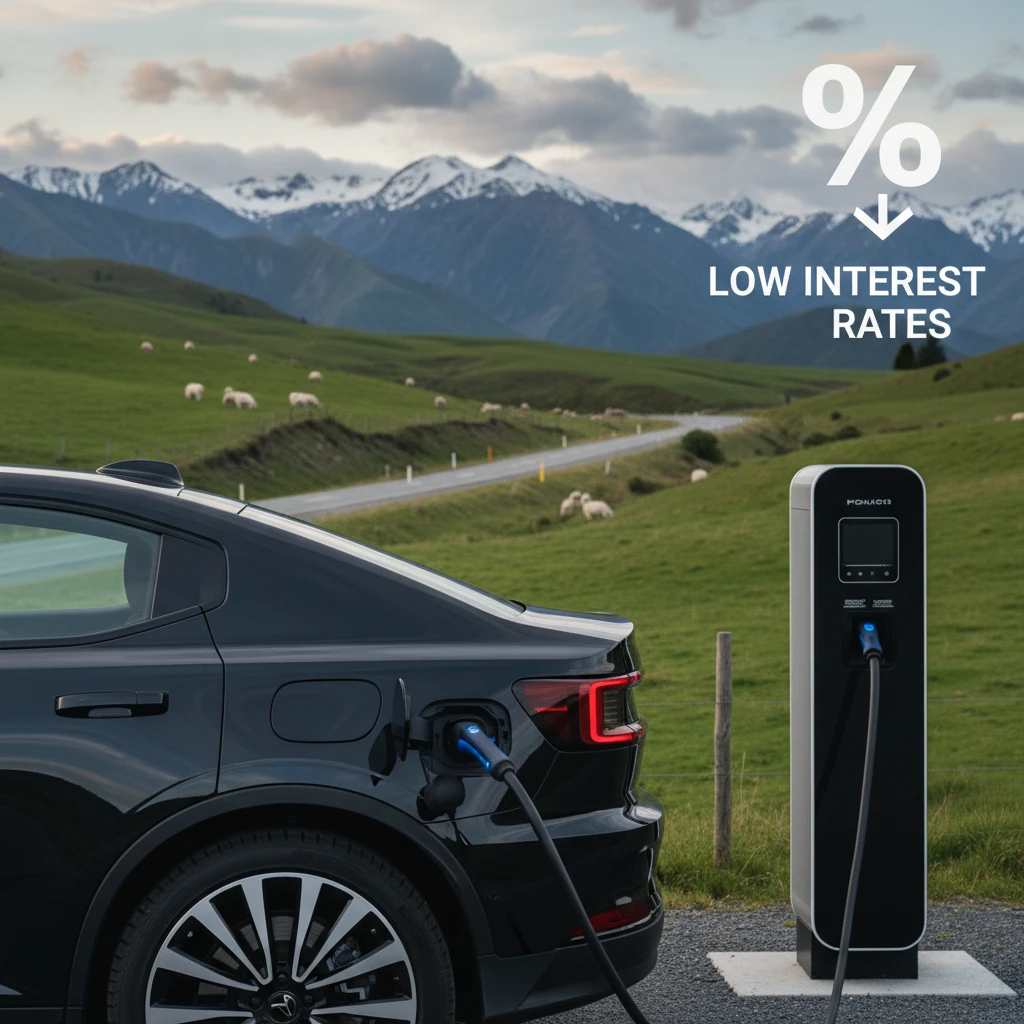
Conversely, while the direct rebate for EVs is gone, many lenders still offer “Green Loan” incentives. Banks like Westpac and ASB have introduced specific low-interest loan products (some as low as 0% or 1% for a fixed period) specifically for electric or hybrid vehicles. When searching for car finance rates NZ, checking if your vehicle qualifies for a green top-up loan is one of the smartest moves you can make.
How to Secure the Best Interest Rate
Getting the best rate isn’t just about luck; it is about preparation. Lenders in New Zealand use risk-based pricing, meaning your rate is determined by how likely you are to repay the debt.
1. Check Your Credit Score
Before applying, check your credit score with bureaus like Centrix, illion, or Equifax. A score above 700 usually unlocks the prime tier of interest rates. If your score is low, spend a few months paying down small debts to improve it before applying for a large car loan.
2. Increase Your Deposit
The more “skin in the game” you have, the lower the risk for the lender. A deposit of 20% or more can significantly reduce your interest rate compared to a “no deposit” finance deal. It also reduces the risk of owing more than the car is worth later on.
3. Choose a Secured Loan
Unsecured personal loans always carry higher rates because the lender has no collateral. By securing the loan against the vehicle you are buying, you can often drop your interest rate by 3% to 5%.
Hidden Costs and Fees to Watch For
When comparing car finance rates NZ, the interest rate is only part of the story. To calculate the true cost of the loan, you must account for additional fees that can add hundreds of dollars to the total.
- Establishment Fee: A one-off fee charged for setting up the loan. This can range from $100 to over $500 depending on the lender.
- PPSR Fee: A small government fee (usually around $8-$10) to register the security interest on the Personal Property Securities Register, often marked up by lenders.
- Monthly Admin Fees: Some lenders charge $5 to $10 per month just to manage the account. Over a 5-year loan, this adds up to $600.
- Early Repayment Fees: If you try to pay your loan off early to save interest, some lenders charge a penalty fee to recoup their expected profit. Always ask if there is a penalty for early settlement.
Frequently Asked Questions
What is a good interest rate for a car loan in NZ?
In 2024, a good interest rate for a secured car loan for a borrower with excellent credit is between 8.95% and 10.95% p.a. However, rates for used cars or unsecured loans often range from 12.95% to 18.95% p.a.
Can I get car finance with bad credit in NZ?
Yes, there are specialized second-tier lenders in NZ that offer finance to people with bad credit. However, expect significantly higher interest rates (often 18% to 25%+) and stricter conditions, such as required deposits or shorter loan terms.
Is it better to use a personal loan or dealer finance?
Personal loans generally offer more negotiation power and transparency, making them better for used car purchases. Dealer finance is often better for brand-new cars where manufacturers offer subsidized low-interest rates (e.g., 1.9% p.a.).
What is the minimum deposit for car finance in NZ?
Many lenders offer “no deposit” finance, but this increases your interest rate and repayments. A standard recommended deposit is 10% to 20% of the vehicle’s purchase price to ensure you don’t fall into negative equity.
How does the Clean Car Standard affect car prices?
The Clean Car Standard imposes fees on importers for high-emission vehicles, which increases the retail price of Utes and large SUVs. This means you may need to borrow a larger amount to purchase these types of vehicles.
Can I pay off my car loan early in NZ?
Most lenders allow early repayment, but many charge an early settlement fee or administrative cost. It is crucial to check the terms and conditions regarding “break fees” before signing your finance agreement.


