
In 2024, the average cost to build a house in New Zealand typically ranges between $2,500 and $4,500 per square meter. While standard group home builds sit at the lower end of this spectrum, architectural designs and high-specification finishes can easily exceed $5,000 per square meter. Crucially, these figures exclude the cost of land, council consents, and site works.
Deciding between building a new home and buying an existing property is one of the most significant financial decisions a Kiwi household will face. While buying existing offers immediacy and established neighborhoods, building offers customisation and significant tax and lending advantages. This guide dissects the financial realities of building a house in NZ, focusing on costs per square meter, LVR exemptions, and the hidden expenses that catch many off guard.
The Real Cost to Build in NZ Per Square Meter
When researching building a house nz cost, the most common metric you will encounter is the cost per square meter. However, this metric can be misleading if not contextualized properly. The “sticker price” often advertised by group home builders usually covers only the house itself, stopping at the exterior cladding and interior lining.
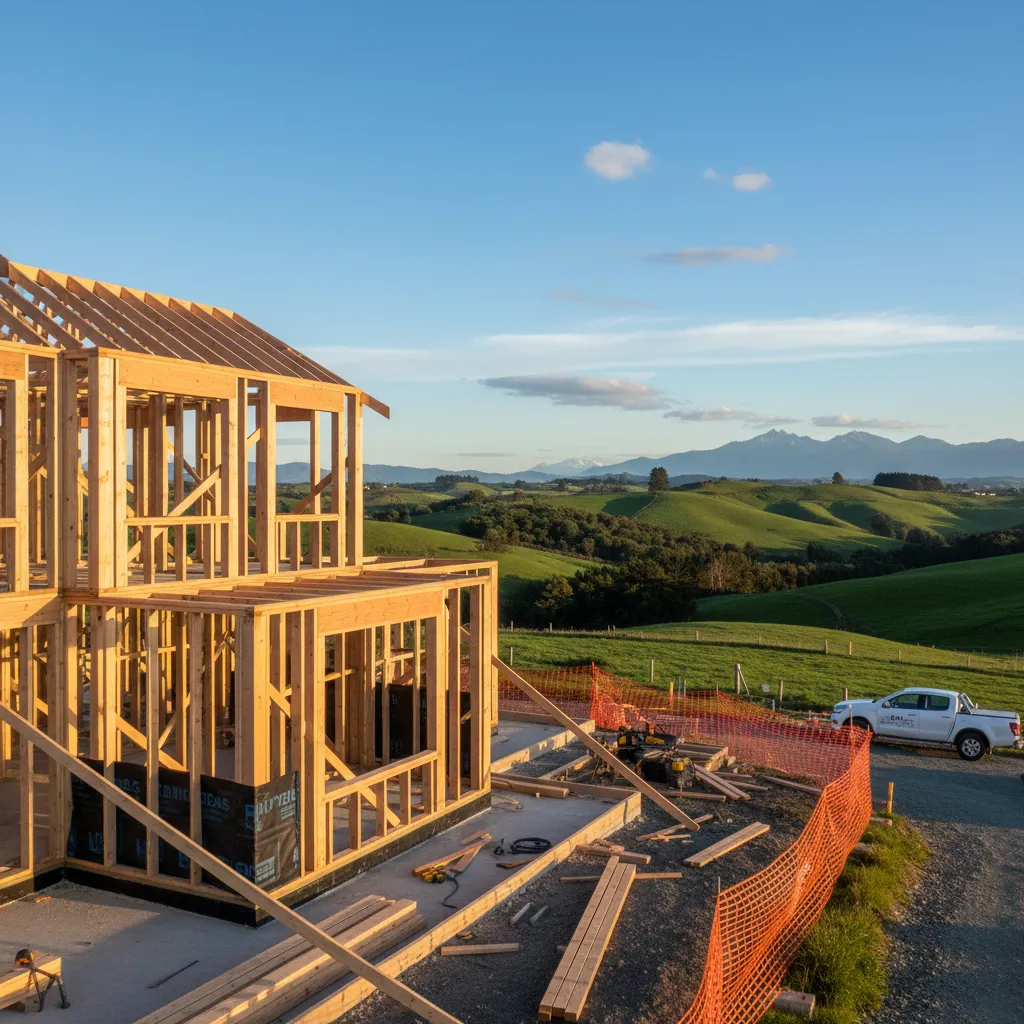
Standard vs. Architectural Build Costs
The disparity in pricing is driven largely by the complexity of the design and the quality of materials used. In the current New Zealand market, we can categorize build costs into three distinct tiers:
- Entry-Level / Group Home Builders ($2,400 – $3,000 per sqm): These are usually pre-designed plans with limited customization. Materials are standard, off-the-shelf products. This is the most cost-effective route but offers the least flexibility.
- Mid-Range Custom ($3,000 – $4,500 per sqm): This tier allows for significant modification of plans or a completely custom design. You will typically see higher ceilings, better insulation specs, and premium kitchen joinery.
- High-End / Architectural ($5,000+ per sqm): Bespoke architecture involving complex engineering, expensive cladding (such as cedar or stone), and luxury interiors. There is virtually no upper limit in this category.
Regional Variations
Geography plays a massive role in your final invoice. Building in major urban centers like Auckland or Queenstown attracts a premium due to higher labor costs and logistical challenges. Conversely, building in regions like Manawatū or Southland may yield a lower cost per square meter, although the availability of specialized tradespeople can sometimes invert this benefit.
LVR Exemptions and Financing New Builds
One of the most compelling arguments for building rather than buying existing lies in the banking regulations. The Reserve Bank of New Zealand (RBNZ) imposes Loan-to-Value Ratio (LVR) restrictions to stabilize the housing market, but new builds are frequently exempt from these tight rules.
Why Banks Prefer New Builds
For an existing property, investors typically require a 35-40% deposit, and owner-occupiers often need 20%. However, under the LVR exemptions for new builds, banks are permitted to lend with significantly lower deposits. It is common for owner-occupiers to secure a construction loan with as little as a 10% deposit.

Tax Advantages
Beyond the deposit, the bright-line property rule—which taxes capital gains if a property is sold within a certain timeframe—has historically treated new builds more favorably (typically a 5-year window versus 10 years for existing, though policies are subject to government change). Additionally, investors buying new builds have often retained the ability to deduct interest payments against rental income, a benefit that was phased out for existing properties.
Turnkey vs. Progress Payment Contracts
Understanding how you pay for your build is just as important as how much you pay. In New Zealand, residential construction contracts generally fall into two categories: Turnkey and Progress Payments.
Turnkey Contracts
A Turnkey contract is exactly what it sounds like: you pay a deposit (usually 10%) upfront, and you do not pay the balance until the house is finished and the key is turned in the lock.
Pros:
- Cashflow Friendly: You don’t pay a mortgage on the new build while you are paying rent or a mortgage elsewhere.
- Fixed Price Certainty: The price is locked in early, protecting you from material price escalations during the build.
Cons:
- Higher Premium: Builders often charge more to cover their carrying costs (interest on their own loans) during construction.
- Less Control: Since you aren’t paying as you go, you may have less leverage to demand changes or inspect quality at every stage.
Progress Payment Contracts
This is the standard model for most custom builds. You purchase the land first, then make payments to the builder at specific milestones (e.g., slab down, roof on, framing complete).
Pros:
- Transparency: You can see exactly where the money is going at each stage.
- Lower Total Cost: You avoid the developer’s financing premium found in turnkey packages.
Cons:
- Double Overheads: You must service the loan on the land and the progress payments while simultaneously paying for your current accommodation.
The Hidden Costs of Building a House
When calculating building a house nz cost, the base build price is rarely the final figure. Many first-time builders are blindsided by “out of contract” expenses that can add 15-25% to the total project cost.
Earthworks and Foundations
Most build contracts include a “provisional sum” for earthworks based on a flat site. If your soil report reveals peat, rock, or instability, the cost to engineer a suitable foundation can skyrocket. Retaining walls and extensive excavation are rarely fully captured in the initial quote.
Council Contribution Fees and Consents
Before a shovel hits the dirt, you must pay for Building Consents and potentially Resource Consents. Furthermore, local councils charge Development Contributions (DCs) to pay for the infrastructure (water, roads, parks) required to support your new home. In high-growth areas, DCs alone can cost between $20,000 and $40,000.
The “Finishing” Costs
A “complete” house in a builder’s contract often lacks the elements that make a house livable. Common exclusions include:
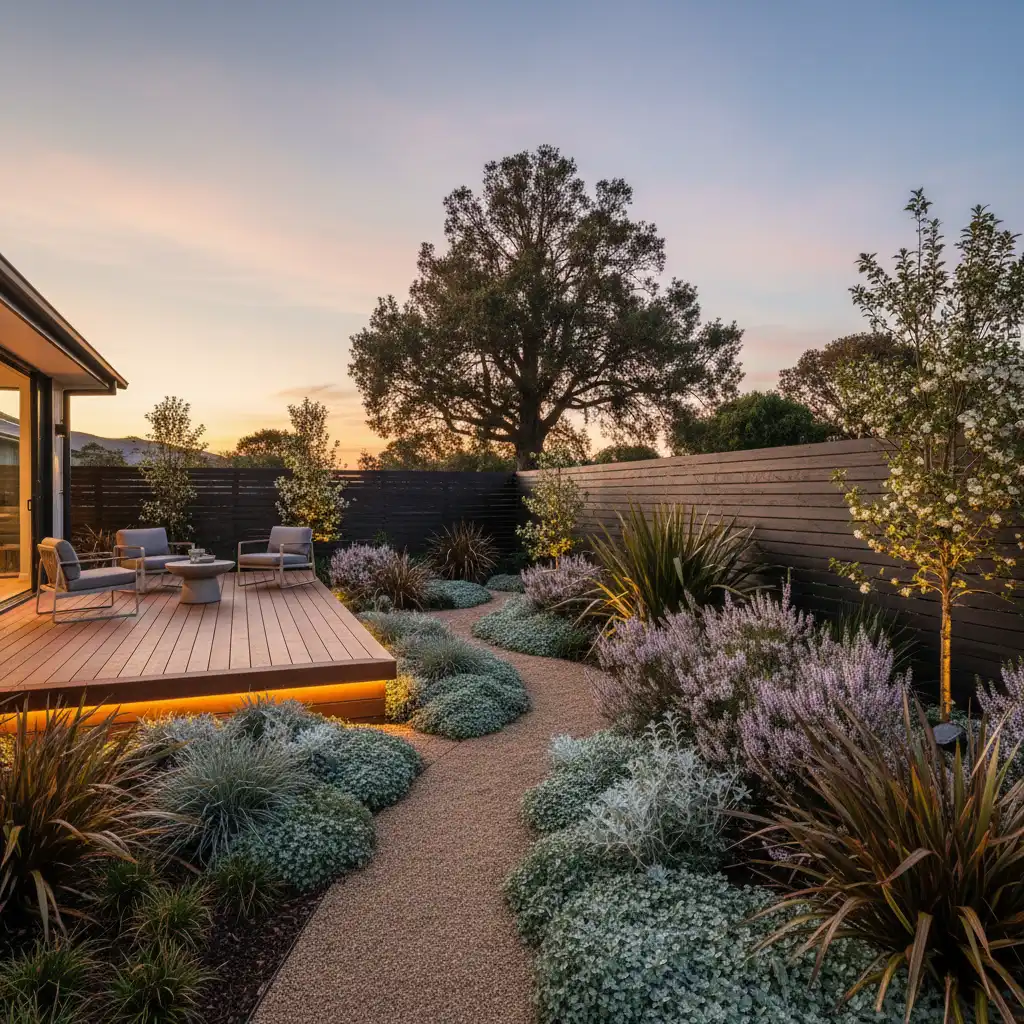
- Landscaping: Driveways, fencing, decks, and lawns.
- Window Treatments: Blinds and curtains are almost never included.
- Utility Connections: Connecting power, fiber, and water from the street to the house.
Building vs. Buying: The Final Verdict
Is it cheaper to build or buy in NZ? Historically, building was often cheaper or on par with buying existing, provided you could manage the project efficiently. In the current market, with high material inflation, building often comes at a premium upfront cost compared to buying an existing home. However, the long-term value proposition of a new build remains strong due to lower maintenance costs, higher energy efficiency (meeting H1 insulation standards), and better tax treatment.
Summary Comparison
Choose to Build If: You want a home tailored to your lifestyle, require lower deposit lending (LVR exemptions), and want a warm, dry home with minimal maintenance for the next decade.
Choose to Buy Existing If: You need immediate housing, want to secure a location in an established suburb where land is scarce, or have a limited budget that cannot accommodate cost overruns.
Frequently Asked Questions
What is the average cost to build a 3 bedroom house in NZ?
As of 2024, the average cost to build a standard 3-bedroom house (approx. 150-180sqm) in New Zealand is between $400,000 and $650,000. This figure covers the house construction only and excludes the cost of the land, driveway, landscaping, and council fees.
Is it cheaper to buy land and build or buy a house in NZ?
Currently, buying an existing house is often cheaper upfront than buying land and building, due to the high cost of materials and labor. However, building offers better long-term value through energy efficiency, lower maintenance, and potential capital gains upon completion.
How much deposit do I need for a new build in NZ?
Most banks require a 10% to 20% deposit for a new build. Because new builds are exempt from standard LVR restrictions, it is easier to secure a loan with a low deposit compared to the 20% minimum typically required for existing properties.
What are the hidden costs of building a house?
Common hidden costs include earthworks and soil removal, council development contributions, utility connections (power/water), landscaping, fencing, driveways, and window treatments (curtains/blinds), which are rarely included in the base contract price.
How long does it take to build a house in NZ?
The average build time in New Zealand is currently 9 to 12 months from the time the slab is poured. However, the pre-construction phase (design, consenting, and financing) can add another 4 to 6 months to the timeline.
What is a turnkey package?
A turnkey package is a house and land bundle where you pay a deposit upfront (usually 10%) and pay the remaining balance only when the house is fully completed. This avoids progress payments during construction, making it easier to manage cash flow.


