
Buying a house in Auckland requires navigating a dynamic market shaped by the Unitary Plan, interest rate fluctuations, and specific zoning laws. Success involves securing pre-approved finance, understanding sale methods like auctions and tenders, and identifying high-growth suburbs with infrastructure investment. Thorough due diligence, including LIM reports and building inspections, is critical before making an unconditional offer.
The Auckland property market is often viewed as the barometer for the New Zealand economy. For first-home buyers and seasoned investors alike, the process of buying a house in Auckland is distinct from the rest of the country due to high competition, unique zoning regulations under the Unitary Plan, and a prevalence of auction sales. This guide provides a comprehensive financial and strategic overview to help you secure a property in New Zealand’s largest city.
Current Auckland Market Analysis
Understanding the macroeconomic factors influencing real estate is the first step in buying a house in Auckland. The market has shifted significantly over the last 24 months, moving from a frenzy of capital gains to a more stabilized, buyer-friendly environment.
Interest Rates and Affordability
The Reserve Bank of New Zealand (RBNZ) uses the Official Cash Rate (OCR) to manage inflation, which directly impacts mortgage rates. Currently, buyers are facing higher test rates from banks, meaning you must prove you can service a mortgage at a rate significantly higher than the advertised interest rate. This “stress test” has reduced the borrowing power of many buyers, cooling demand and stabilizing prices.
Inventory Levels
Inventory levels—the number of houses available for sale—have fluctuated. When inventory is high, buyers have more leverage to negotiate. Conversely, low inventory creates competition. Currently, Auckland is seeing a healthy supply of listings, giving buyers the luxury of choice and the ability to perform deeper due diligence without the pressure to “panic buy.”

The Unitary Plan and Intensification
You cannot effectively strategize buying a house in Auckland without understanding the Auckland Unitary Plan (AUP). Implemented to manage the city’s growth, the AUP determines what can be built and where. It has shifted the focus from traditional quarter-acre sections to high-density living.
Why Zoning Matters for Value
The value of a property in Auckland is heavily dictated by its zone. A run-down bungalow on a site zoned for high density is often worth more than a pristine mansion on a site with restrictive heritage overlays.
- Terrace Housing and Apartment Buildings (THAB) Zone: This allows for the greatest density and height. Properties here are prime targets for developers. If you buy here, expect construction noise and future high-rise neighbors, but also high land value retention.
- Mixed Housing Urban: Allows for three-story dwellings. This is the “sweet spot” for many investors looking for development potential without the intensity of the city center.
- Mixed Housing Suburban: The most common zone, allowing for two-story detached or attached housing. This zone retains a more traditional suburban feel while still allowing for some intensification.
The Impact of Medium Density Standards (MDRS)
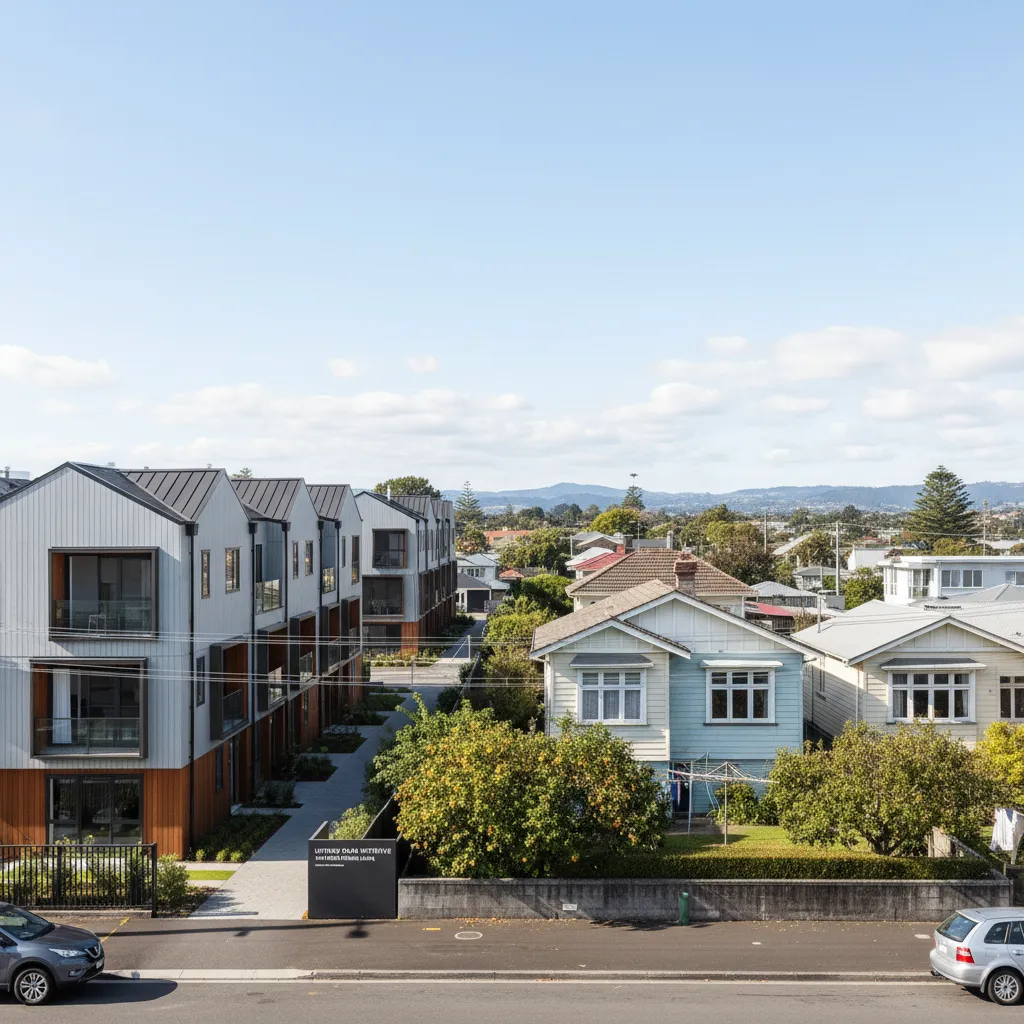
Recent government legislation regarding Medium Density Residential Standards allows for three homes of up to three stories to be built on most sites without resource consent. For a buyer, this means you must check the development potential of the neighbors before purchasing. That quiet view you are paying for today could be blocked by a townhouse complex tomorrow.
Up-and-Coming Suburbs to Watch
Smart property acquisition involves identifying areas where infrastructure spending will drive future capital growth. In Auckland, transport links are the primary driver of value uplift.
South Auckland: Manukau and Papakura
Historically more affordable, South Auckland is undergoing a transformation. The investment in the Southern Motorway and electric train electrification has made commuting viable. Suburbs like Papakura offer larger land parcels for significantly less than the central isthmus, providing a strong entry point for first-home buyers.
West Auckland: Te Atatu Peninsula and Henderson
Te Atatu Peninsula has already seen a boom, but surrounding areas like Henderson are catching up. With the City Rail Link (CRL) nearing completion, travel times from the West into the CBD will decrease, making these suburbs highly attractive for commuters. Henderson, with its major retail hub and transport center, is a key area for intensification.
The North West: Hobsonville and Whenuapai
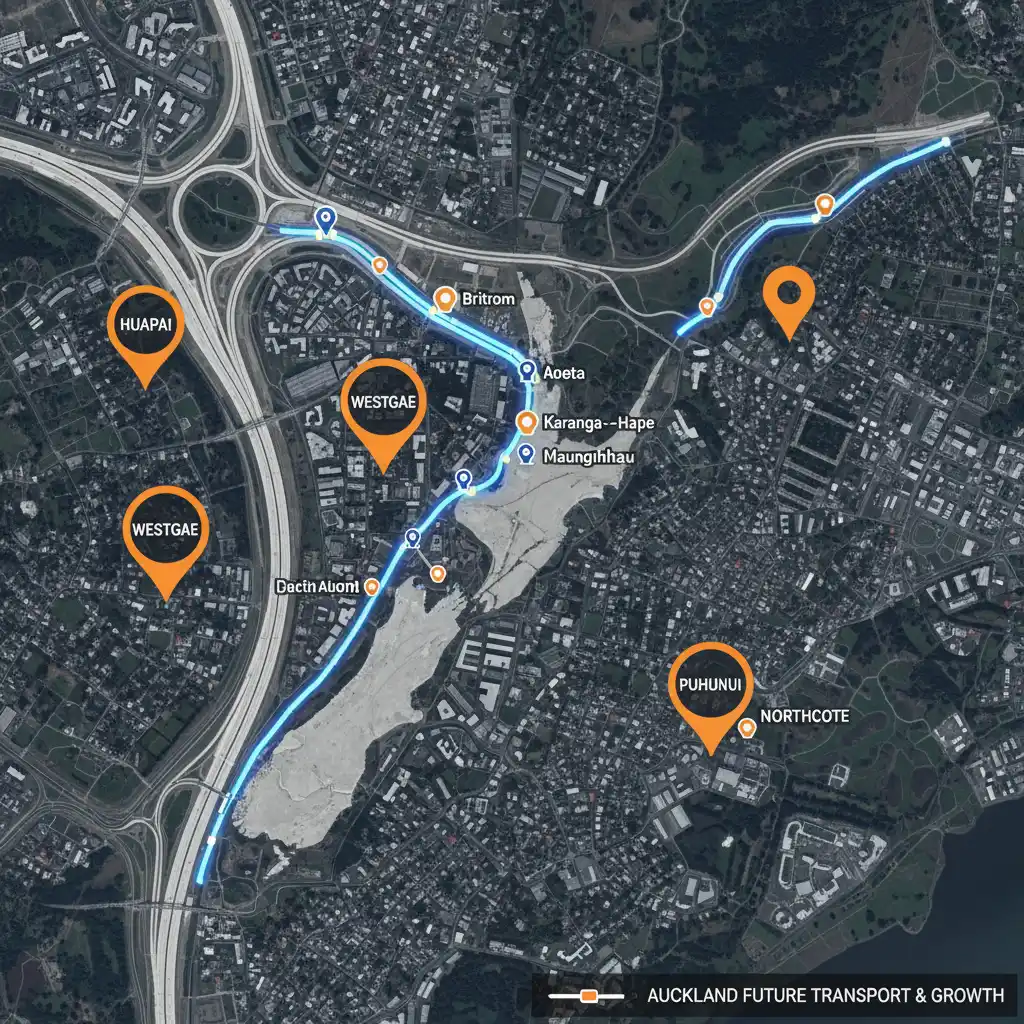
While Hobsonville Point is a master-planned community commanding premium prices, neighboring Whenuapai and Westgate are benefiting from the massive infrastructure spend in the area. The Westgate shopping complex and new motorway connections make this a self-sufficient satellite city.
Auction vs. Negotiation vs. Tender
Auckland has a unique sales culture compared to the rest of New Zealand. Understanding the method of sale is crucial for your buying strategy.
Buying at Auction
Auctions are the preferred method for many Auckland agents. The critical factor with an auction is that it is unconditional. If the hammer falls and you are the highest bidder, you own the house. There is no cooling-off period.
- Strategy: You must complete all due diligence (building report, finance approval, legal check) before the auction. This can be costly if you don’t win, but it is necessary.
- Pre-Auction Offers: You can submit an offer before the auction date. If acceptable, the auction is brought forward, usually giving other buyers 2-3 days to compete.
Negotiation (Price by Negotiation)
This is more favorable for buyers. You can submit an offer conditional on finance, a building report, or the sale of your own home. However, in a hot market, a “clean” unconditional offer will almost always trump a higher conditional offer.
Tender and Deadline Sale
These are essentially “blind auctions.” You submit your best written offer by a specific date. You do not know what others are offering. Tenders allow you to add conditions, but again, fewer conditions make your offer more attractive. This method requires a strong understanding of comparable sales (CMAs) to avoid overpaying or underbidding.
Financing Your Auckland Property
Securing finance in the current banking climate requires preparation. The “Credit Contracts and Consumer Finance Act” (CCCFA) changes have made banks scrutinize spending habits closely.
Deposit Requirements and LVR
Loan-to-Value Ratio (LVR) restrictions generally require investors to have a 35-40% deposit, while owner-occupiers usually need 20%. However, banks have a specific allowance for low-deposit lending (10-15%) for strong candidates, though this often comes with a Low Equity Margin (LEM) fee or higher interest rate.
KiwiSaver and First Home Grants
If you are buying your first house in Auckland, you may be eligible to withdraw your KiwiSaver contributions (excluding the government $1,000 kickstart). Additionally, the First Home Grant can provide up to $10,000 for a couple buying an existing home, or $20,000 for a new build, subject to income caps and house price caps.

Essential Due Diligence
Never cut corners on due diligence. The cost of a report is a fraction of the cost of repairing a leaky home.
The LIM Report
A Land Information Memorandum (LIM) is a council report detailing everything the council knows about the property. It includes zoning, storm water and sewage lines, rates, and consents. Look for unconsented works, which can invalidate insurance.
Building Inspections
Auckland has a history of “leaky buildings” built between 1994 and 2004 using monolithic cladding. A comprehensive moisture test and structural report are non-negotiable for plaster homes from this era. Even for brick and tile homes, checking the roof, wiring, and piling is essential.
Title Search
Your solicitor will check the Certificate of Title for easements (rights of access), covenants (rules on what you can build), and caveats (claims by others on the property).
People Also Ask
Is now a good time to buy a house in Auckland?
Market timing is difficult, but buying when prices have stabilized and inventory is high generally favors the buyer. While interest rates may be higher, the reduced competition and lower purchase prices compared to peak market conditions offer a strong opportunity for long-term hold strategies.
How much deposit do I need for a house in Auckland?
Generally, you need a 20% deposit. For a $1,000,000 home, this is $200,000. However, first-home buyers may qualify for 10% deposit loans under the First Home Loan scheme if they meet income and price cap criteria.
What are the hidden costs of buying a house in Auckland?
Beyond the deposit, budget for a building inspection ($600-$1,000), LIM report ($300-$400), registered valuation ($800-$1,200), solicitor fees ($1,500-$2,500), and moving costs. You may also need to pay for a toxicology report if the property was a rental.
What is the difference between CV and market value?
CV (Capital Value) or RV (Rateable Value) is a figure set by the Council for calculating rates (taxes). It is generated by an algorithm every three years and does not necessarily reflect current market value. Properties can sell significantly above or below CV depending on market conditions.
How does a pre-auction offer work?
A pre-auction offer is an unconditional offer made before the scheduled auction date. If the vendor accepts the price effectively as the “reserve,” the auction is brought forward (usually within 2-3 days). The opening bid will be your offer figure, and others can bid higher. If no one bids, you win.
Can I buy a house in Auckland if I am not a resident?
Generally, no. Under the Overseas Investment Amendment Act 2018, only New Zealand citizens and residents (who are “ordinarily resident”) can buy residential property. There are exceptions for Australians and Singaporeans due to free trade agreements, and for buying new build apartments in large developments (with restrictions).


